FDA Removes HRT Warnings: What It Means for Women’s Health
FDA Removes Misleading Hormone Therapy Warnings: A Long-Overdue Course Correction in Women’s Health
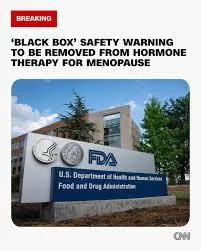
For more than two decades, hormone replacement therapy (HRT) has carried a disproportionate stigma driven not by current science, but by outdated regulatory messaging. In November 2025, the U.S. Department of Health and Human Services (HHS), in coordination with the U.S. Food and Drug Administration (FDA), formally initiated the removal of broad “black box” warnings on menopausal hormone therapy products—marking a significant and necessary recalibration in women’s healthcare policy (U.S. Food and Drug Administration [FDA], 2025).
This action represents more than a labeling change. It reflects a recognition that prior warnings overstated risk, lacked clinical nuance, and ultimately restricted access to one of the most effective treatments for menopausal symptoms.
The Origin of the HRT Controversy
The black box warnings originated in the early 2000s following initial reports from the Women’s Health Initiative (WHI). At the time, findings were broadly interpreted to suggest that hormone therapy increased risks of cardiovascular disease, breast cancer, and cognitive decline in postmenopausal women.
What was lost in translation was context. The average age of WHI participants was 63—well beyond the typical age of menopause onset—and many participants initiated hormone therapy years after menopause had already occurred. Subsequent analyses made it clear that these results were not generalizable to younger women, nor to those starting therapy near the onset of menopause (Manson et al., 2024).
Despite mounting evidence clarifying these distinctions, the FDA’s most severe warning label remained in place for years, contributing to widespread fear, under-treatment of symptoms, and diminished quality of life for millions of women.
Why the FDA Changed Course
In its 2025 announcement, the FDA acknowledged that the original black box warnings failed to reflect modern clinical evidence and contemporary prescribing practices (FDA, 2025). After reviewing decades of follow-up data, expert consensus statements, and public commentary, the agency concluded that the warnings no longer accurately represented the benefit–risk profile of menopausal hormone therapy.
Key conclusions driving the change include:
Hormone therapy initiated before age 60 or within 10 years of menopause onset demonstrates a favorable safety profile for appropriately selected patients (Manson et al., 2024).
Cardiovascular risk associated with hormone therapy is highly dependent on timing, formulation, dose, and route of administration, not simply hormone use itself (FDA, 2025).
Overly broad warnings discouraged individualized decision-making and interfered with informed consent between patients and clinicians (FDA, 2025).
As a result, the FDA is now working with manufacturers to update product labeling to reflect current evidence rather than legacy assumptions.
What the Science Actually Shows
Contemporary research supports menopausal hormone therapy as the most effective treatment for vasomotor symptoms, including hot flashes and night sweats. Beyond symptom relief, hormone therapy has demonstrated benefits in sleep quality, mood stability, sexual health, and prevention of bone loss (Manson et al., 2024).
Importantly, long-term follow-up from the WHI and subsequent trials show no significant increase in all-cause mortality among women who initiated hormone therapy earlier in menopause. In some subgroups, outcomes related to cardiovascular health and longevity were neutral or favorable when therapy was started within the recommended window (Manson et al., 2024).
This does not imply that hormone therapy is appropriate for every woman. Rather, it underscores that risk is individualized, not universal.
Implications for Women Today
The removal of black box warnings does not eliminate safety considerations, nor does it promote indiscriminate prescribing. Instead, it restores balance—allowing women and their healthcare providers to evaluate hormone therapy based on personal risk factors, symptom severity, and health goals.
For women navigating perimenopause and menopause, this regulatory shift signals a return to evidence-based care. Hormone therapy can now be discussed without the shadow of outdated, fear-driven messaging that no longer aligns with the science.
Bottom Line
The FDA’s decision represents a long-overdue acknowledgment that menopausal hormone therapy was unfairly constrained by misinterpreted data. With updated labeling grounded in modern evidence, women can make informed decisions rooted in facts—not fear.
Hormone therapy, when appropriately prescribed and monitored, remains a cornerstone of effective menopause management.
References
Manson, J. E., Aragaki, A. K., Rossouw, J. E., et al. (2024). Menopausal hormone therapy and health outcomes during the intervention and extended poststopping phases of the Women’s Health Initiative randomized trials. JAMA, 331(5), 409–426. https://jamanetwork.com/journals/jama/fullarticle/2841321
U.S. Food and Drug Administration. (2025, November 10). HHS advances women’s health by removing misleading FDA warnings on hormone replacement therapy. https://www.fda.gov/news-events/press-announcements/hhs-advances-womens-health-removes-misleading-fda-warnings-hormone-replacement-therapy

